








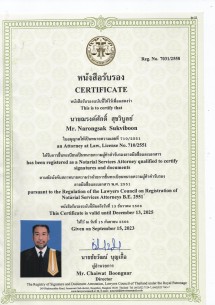




criminal lawyer in thailand



Criminal Lawyer in Thailand | Criminal Defense Lawyer in Bangkok
Need a Criminal Lawyer in Thailand?
If you have been summoned by the police, accused of a criminal offence, arrested, charged, or received a criminal court summons in Thailand, obtaining legal advice at an early stage can be important.
Criminal cases may involve police investigations, statements to investigators, bail applications, court proceedings, examination of witnesses, criminal appeals and other legal procedures. The appropriate strategy will depend on the charge, evidence and circumstances of each individual case.
Our law office provides legal assistance in criminal matters for Thai and foreign clients in Thailand, including criminal defense, police summons, court proceedings and criminal appeals.
Speak with a Criminal Lawyer in Thailand
Call: 083-884-3287
Summoned by the Police in Thailand?
Receiving a police summons does not automatically mean that you are guilty.
However, you should understand the allegation and review the relevant facts before giving a detailed statement.
If you receive a police summons in Thailand, consider preparing:
-
The police summons
-
Passport or identification documents
-
Contracts or agreements related to the dispute
-
Bank transfer records
-
LINE, WhatsApp, email or other communications
-
Photographs and video evidence
-
Company documents
-
Receipts and payment records
-
Any documents relating to the complainant
A criminal lawyer can review the allegation and available evidence before you attend the police station.
Received a police summons in Thailand? Call 083-884-3287
Arrested or Accused of a Crime in Thailand
If you have been arrested or informed that you are accused of a criminal offence, the early stages of the case can be important.
The facts recorded during an investigation may later become relevant to the prosecution and court proceedings.
Before giving a detailed explanation, it may be useful to understand:
-
What offence you are accused of
-
Who filed the complaint
-
What conduct is alleged
-
What evidence may exist
-
Whether documents or electronic communications are involved
-
Whether the dispute also involves a civil or commercial matter
Foreign nationals may also face practical difficulties because documents, police records and court proceedings are normally conducted in Thai.
Legal assistance can therefore be particularly useful when a foreign defendant needs to understand the Thai criminal process and communicate effectively with the relevant authorities.
Criminal Defense Lawyer for Foreigners in Thailand
Foreign nationals may become involved in criminal proceedings in Thailand as defendants, suspects, complainants or witnesses.
Common situations include:
-
Business disputes that result in criminal complaints
-
Fraud allegations
-
Embezzlement allegations
-
Forgery allegations
-
Property disputes
-
Assault cases
-
Defamation cases
-
Theft allegations
-
Disputes involving companies or directors
-
Online transactions
-
Financial disputes
-
Criminal complaints connected with contracts
Being a foreigner does not change the basic requirement that each criminal case must be considered according to Thai law and the evidence.
However, language barriers and unfamiliarity with Thai legal procedure can make the situation more difficult.
A criminal lawyer can assist in reviewing documents, explaining the procedure and preparing the case for each stage of proceedings.
Criminal Cases We Handle in Thailand
Fraud Cases
Fraud cases commonly involve allegations that one person deceived another and obtained property, money or another benefit as a result.
However, not every failed business transaction or breach of contract automatically constitutes criminal fraud.
Important issues may include:
-
What representation was made
-
Whether that representation was false
-
When the representation was made
-
Whether the accused had dishonest intent
-
Whether the complainant relied on the representation
-
Whether money or property was transferred because of it
-
Whether the dispute is actually contractual or civil in nature
Business documents, chat messages, contracts and bank transactions may therefore become important evidence.
Embezzlement Cases
Embezzlement cases often concern property that was initially lawfully possessed but is later alleged to have been dishonestly converted.
The legal issues may include:
-
Who owned the property
-
Why the accused had possession
-
Whether there was joint ownership
-
Whether the property was entrusted to the accused
-
Whether there was dishonest conversion
-
Whether the dispute is actually a civil disagreement
Because the distinction between a civil dispute and criminal conduct may be important, the underlying agreements and financial records should be carefully reviewed.
Forgery and Use of Forged Documents
Forgery cases may involve signatures, company documents, contracts, powers of attorney, receipts or other documents.
Relevant issues may include:
-
Who prepared the document
-
Who signed it
-
Whether the signature is genuine
-
Whether the accused knew the document was forged
-
How the document was used
-
Whether forensic examination has been conducted
Cases involving alleged forged signatures may require detailed consideration of documentary evidence and expert examination.
Theft and Property Crime
Theft and property-related offences may depend heavily on the circumstances surrounding possession and ownership.
A defense may require examination of:
-
Ownership
-
Possession
-
Intention
-
Permission
-
The location where the property was taken
-
CCTV footage
-
Witness testimony
-
Documentary evidence
If you have received a police summons concerning theft or property offences, it is advisable to preserve relevant evidence as soon as possible.
Assault Cases
Assault cases can range from minor physical disputes to cases involving serious injury.
Evidence may include:
-
Medical certificates
-
Hospital records
-
CCTV footage
-
Photographs
-
Witness statements
-
Messages before or after the incident
-
Police reports
The circumstances leading to the incident may also be relevant, including allegations of self-defense or mutual confrontation.
Criminal Defamation Cases
Criminal defamation cases may arise from statements made:
-
In person
-
On Facebook
-
On LINE
-
On TikTok
-
In online reviews
-
In business communications
-
In public posts
-
Through other digital platforms
The exact words, context, audience and method of publication can be significant.
Screenshots should therefore be preserved together with the date, URL or account information where possible.
Business Disputes That Become Criminal Cases
A frequent issue in Thailand is a commercial dispute that later develops into a criminal complaint.
Examples may include:
-
Investment disagreements
-
Unpaid debts
-
Shareholder disputes
-
Partnership disputes
-
Failed purchases
-
Agency disputes
-
Disputes over company money
-
Disputes involving deposits
-
Contract termination
-
Property transactions
A breach of contract and a criminal offence are not necessarily the same thing.
Therefore, when a commercial transaction becomes the subject of a criminal complaint, the complete history of the transaction should be reviewed.
Relevant documents may include contracts, invoices, bank records, company resolutions and communications between the parties.
Bail and Temporary Release in Criminal Cases
A person who has been arrested, detained or charged may need to consider an application for temporary release.
Whether temporary release is granted depends on the circumstances of the individual case and the court or authority considering the application.
Relevant factors may include matters such as the seriousness of the charge, risk of flight and other circumstances considered under the applicable procedure.
Thailand's criminal procedure framework contains rules governing detention, temporary release and criminal proceedings, and current legislation can be searched through the Office of the Council of State's official legal database.
If a family member has been detained or sentenced to imprisonment, legal assistance should be sought promptly so that the available options can be reviewed.
Urgent criminal matter: Call 083-884-3287
Received a Criminal Court Summons in Thailand?
If you receive a summons or court document, do not ignore it.
You should first identify:
-
Which court issued the document
-
The case number
-
The name of the complainant or prosecutor
-
The criminal charge
-
The date you are required to attend
-
Whether you are a defendant, witness or other party
-
What documents have been served with the summons
Send a clear copy of the summons and complaint to your lawyer for review.
The lawyer can then consider the allegations, available evidence and the next procedural step.
From Police Investigation to Criminal Trial
A criminal case may involve several stages.
Depending on the nature of the case, these may include:
Complaint or allegation
↓
Police investigation
↓
Statement and evidence gathering
↓
Prosecutorial consideration
↓
Criminal court proceedings
↓
Evidence and witness examination
↓
Judgment
↓
Appeal, where permitted by law
Not every case follows exactly the same path, and procedural issues may differ depending on the type of offence and court.
Criminal Trial Lawyer in Thailand
Once a criminal case reaches court, the defense should be prepared from the allegations and evidence contained in the case file.
Preparation may include:
-
Reviewing the complaint or indictment
-
Identifying the legal elements of the offence
-
Reviewing prosecution evidence
-
Preparing documentary evidence
-
Preparing defense witnesses
-
Cross-examining prosecution witnesses
-
Presenting the defense case
-
Making legal submissions
-
Reviewing the judgment
The purpose of criminal defense is not simply to deny the accusation.
The defense should identify which elements the prosecution must prove and whether the evidence is sufficient to establish those elements.
Criminal Appeals in Thailand
If the court of first instance has already delivered judgment, a defendant or other entitled party may need to consider whether there are grounds for appeal.
Possible issues may include:
-
Findings of fact
-
Credibility of witnesses
-
Documentary evidence
-
Interpretation of criminal law
-
Whether the conduct satisfies the elements of the offence
-
Procedural issues
-
Sentence or punishment
Appeal rights and limitations depend on the applicable criminal procedure rules and circumstances of the case.
Therefore, the judgment and court record should be reviewed before deciding on an appeal.
If you have already received a judgment, provide your lawyer with:
-
The judgment
-
The indictment or complaint
-
The defendant's plea
-
Relevant evidence
-
Witness testimony if available
-
The date the judgment was read
Need a Criminal Appeal Lawyer in Thailand? Call 083-884-3287
What Evidence Should You Preserve?
If you know that a criminal complaint has been filed, preserve relevant evidence immediately.
Do not delete potentially important communications.
Evidence may include:
-
LINE messages
-
WhatsApp messages
-
Emails
-
Facebook messages
-
CCTV recordings
-
Photographs
-
Contracts
-
Bank statements
-
Bank transfer slips
-
Tax invoices
-
Company documents
-
Voice recordings
-
Location records
-
Witness contact information
Digital evidence can disappear or become difficult to retrieve with time.
It is therefore useful to make secure copies while the information is still available.
What Documents Should You Send to a Criminal Lawyer?
For an initial review, send the documents that are most directly connected with the case.
If you received a police summons
Send:
-
Police summons
-
Brief explanation of the allegation
-
Relevant contracts or documents
-
Important chat messages
-
Bank records if relevant
If you were already charged in court
Send:
-
Criminal complaint or indictment
-
Court summons
-
Relevant court orders
-
Evidence already available
If the court has already delivered judgment
Send:
-
Judgment
-
Complaint or indictment
-
Previous defense documents
-
Date of judgment
-
Information about bail or detention
This allows the lawyer to understand the stage of the case before discussing the next step.
Should I Speak to the Police Before Consulting a Lawyer?
Each case is different.
The important point is to understand the allegation and avoid giving inaccurate information because you are confused about the facts, documents or legal issues.
If the case involves complicated financial transactions, company documents, contracts, electronic evidence or a long history between the parties, reviewing the documents before giving a detailed statement may be particularly important.
Can a Foreign Defendant Leave Thailand During a Criminal Case?
This depends on the circumstances of the case and any orders or conditions imposed by the relevant authority or court.
Foreign defendants should not assume that international travel will always be unrestricted once criminal proceedings have begun.
If you need to travel while involved in a criminal matter, you should check the specific conditions applying to your case.
Can a Criminal Lawyer Guarantee That the Case Will Be Dismissed?
No responsible lawyer should guarantee the result of a criminal case.
The outcome depends on matters such as:
-
The charge
-
The evidence
-
Witness credibility
-
Documentary evidence
-
Applicable law
-
Procedural issues
-
The court's assessment of the case
Legal advice should focus on evaluating the evidence and developing an appropriate strategy rather than promising a particular result.
Frequently Asked Questions
I received a police summons in Thailand. What should I do?
Read the summons carefully, note the appointment date and collect the documents related to the allegation. Consider having a lawyer review the matter before attending the police station.
I am a foreigner accused of a crime in Thailand. Can you assist?
Foreign defendants can obtain legal assistance for police investigations, criminal proceedings, bail issues and other criminal matters in Thailand.
Can a business dispute become a criminal case?
Yes, a commercial dispute may sometimes lead to a criminal allegation. However, breach of contract does not automatically establish criminal liability. The facts and evidence must be examined.
Can I change lawyers during a criminal case?
A defendant may consider changing legal representation subject to the applicable procedure and stage of the case. The new lawyer should receive sufficient time to review the existing file.
Can I appeal after being convicted?
There may be a right to appeal depending on the judgment, legal issues and statutory restrictions applicable to the case. The judgment should be reviewed promptly.
Can I apply for bail after being sentenced?
Temporary release may be considered at different stages of criminal proceedings depending on the circumstances and applicable rules. The specific case should be reviewed without delay.
What is the most important document to send first?
If you received a police summons, send the summons. If you have already been charged, send the complaint or indictment. If judgment has already been delivered, send the judgment first.
Contact a Criminal Lawyer in Thailand
If you are facing a criminal matter in Thailand, you may contact us if you:
Received a police summons
Have been accused of fraud or embezzlement
Have been accused of forgery
Have been accused of theft
Are involved in an assault case
Have received a criminal court summons
Have been arrested or detained
Need advice regarding bail
Have already been convicted and want to consider an appeal
or
Are a foreign national involved in criminal proceedings in Thailand
For an initial review, prepare:
-
Police summons or court document
-
Passport or identification
-
Complaint or indictment, if available
-
Judgment, if already delivered
-
Important evidence
-
A short timeline of events
Criminal Lawyer in Thailand
Call: 083-884-3287
If the matter is urgent, provide the case stage, police station or court, charge, and next appointment date when contacting the office.

Criminal Lawyer in Thailand
Call: 083-884-3287